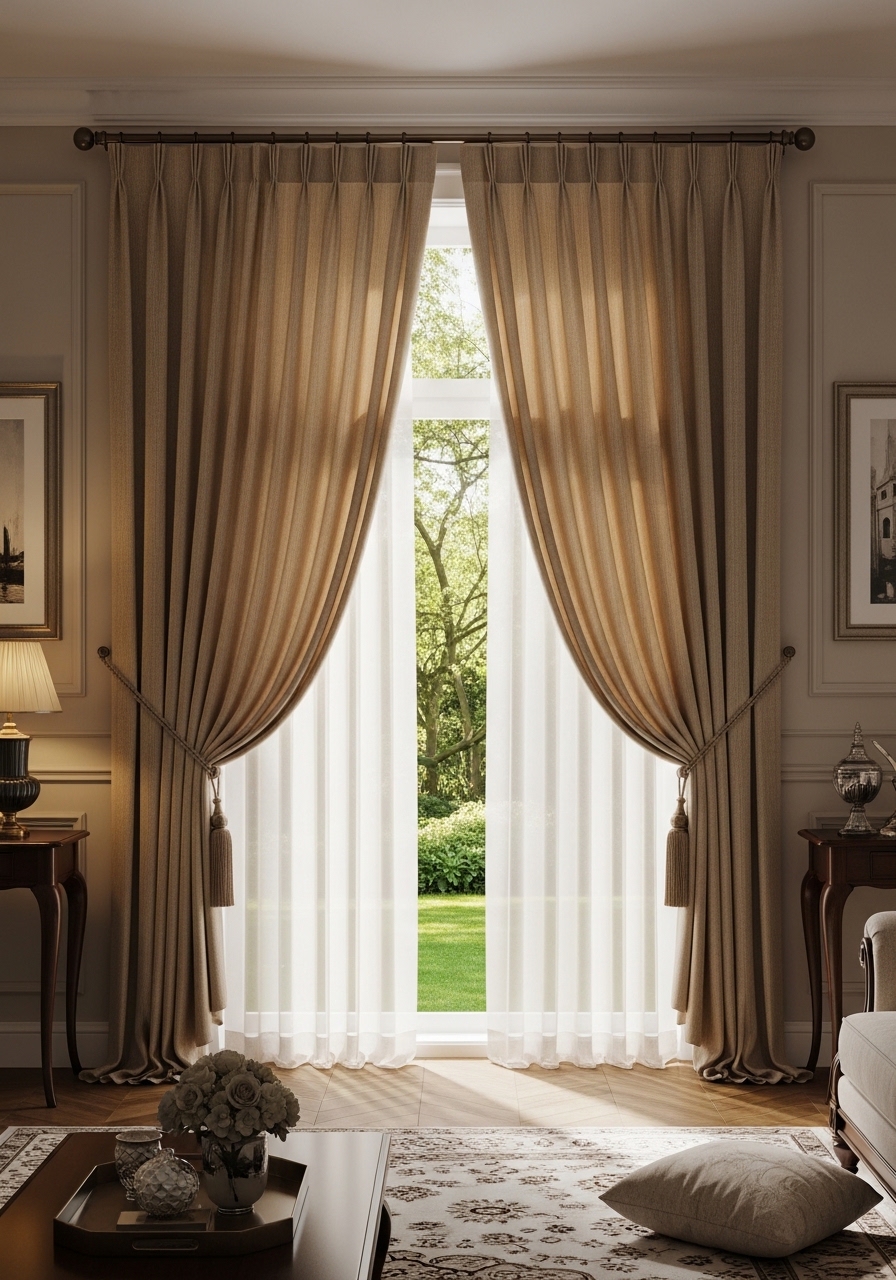
During the Renaissance, curtains and drapes gained particular importance in interior design. Wealthy homes
were decorated with luxurious fabrics such as velvet, silk, batiste, and lace. Ornamentation became more
sophisticated, including geometric patterns as well as images of plants and animals. Textiles were not only
functional but also demonstrated the social status and taste of the homeowner.
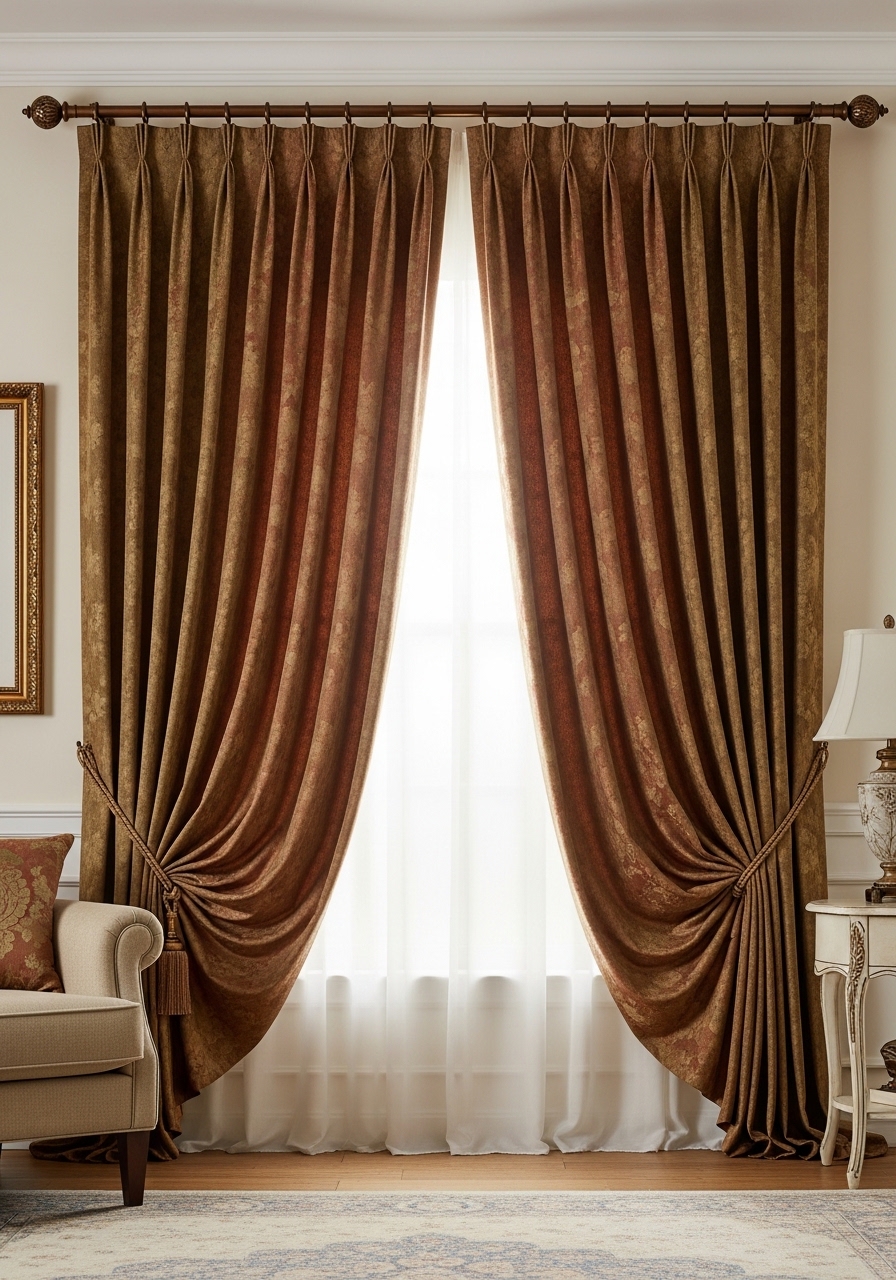
In the Baroque era, designers began paying special attention to the harmony between curtains and furniture
upholstery. Interiors became richer and more dramatic, and textile elements played a major role in creating
this luxurious atmosphere. Curtains were often heavy and richly decorated, emphasizing the grandeur typical of
Baroque interiors.
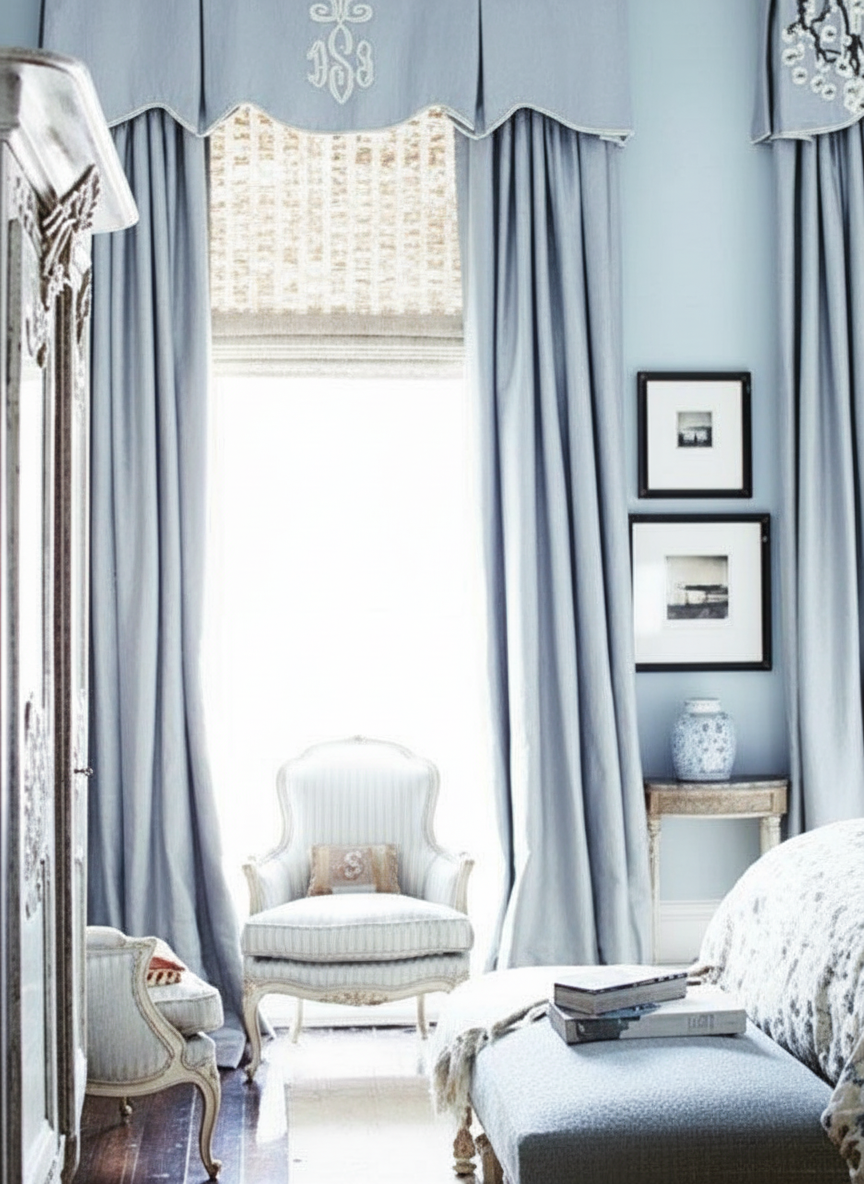
The Rococo style that followed introduced lighter and more elegant aesthetics. Soft pastel tones became
popular, and silk fabrics decorated with delicate patterns were widely used. Window openings in buildings also
became taller and larger, which made curtains an even more significant visual element of the interior.
Decorative details such as ribbons, bows, ruffles, and floral ornaments were commonly added to enhance the
elegant appearance of window treatments.
By the early eighteenth century, the principles of classicism began to dominate European interiors. Harmony
and symmetry became essential design principles. Furniture and curtains were often made from the same fabric
or matched in color to create a unified composition. At the same time, curtain rods and cornices became an
integral part of interior decoration, designed not only for functionality but also for aesthetic value.
Even today, textiles continue to play a major role in shaping the appearance of interior spaces. Modern
designers have access to an enormous variety of fabrics, textures, and colors, which allows them to experiment
with different stylistic solutions. Unlike previous centuries, contemporary interiors rarely follow a single
strict style. Instead, eclectic design has become increasingly popular, combining elements from different eras
and design traditions.
However, when choosing curtains and fabrics, it is still important to follow several design principles to
achieve a balanced result. The color and texture of curtains should complement not only the walls and
furniture but also the size of the room and the amount of natural light it receives. Fabric colors can also
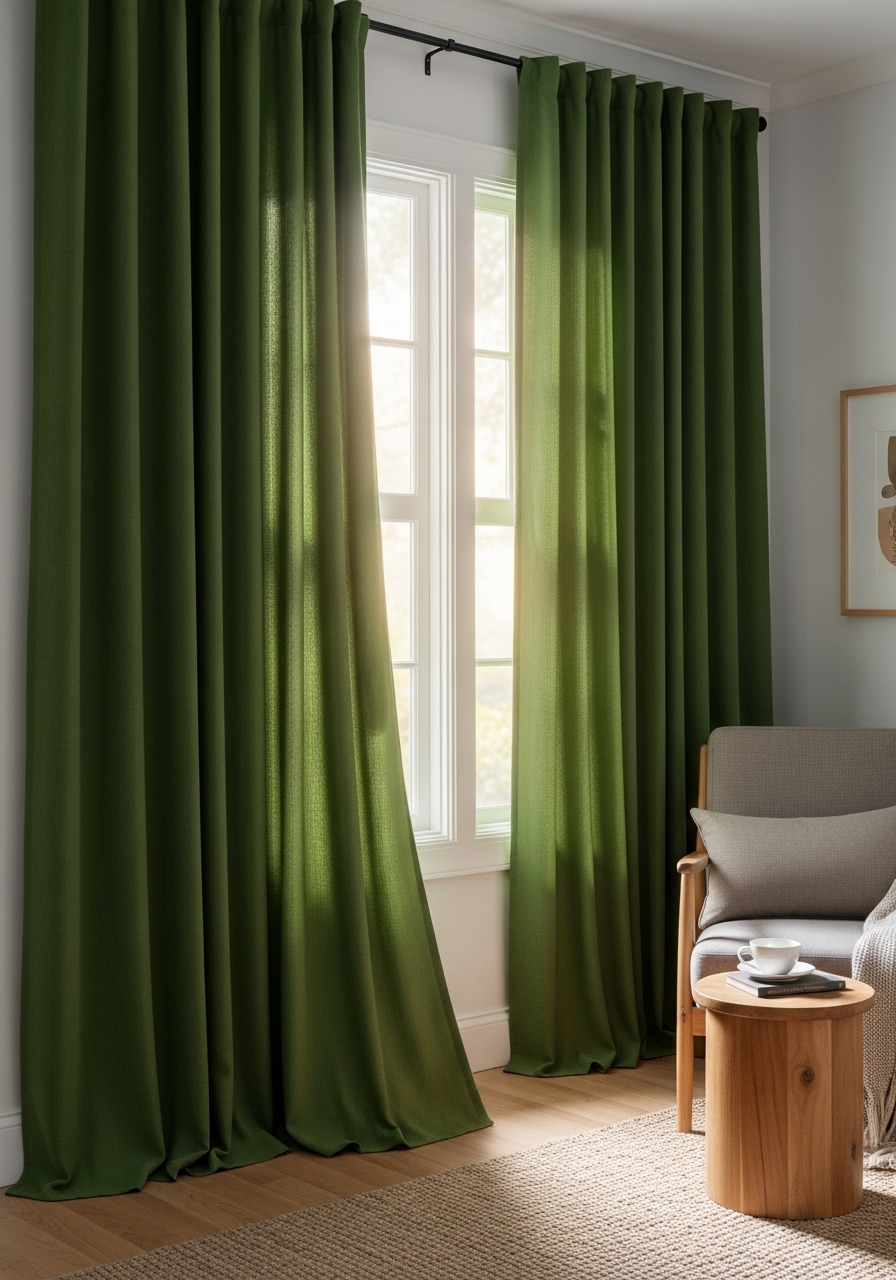
influence the emotional atmosphere of a space. Cool tones such as green, blue, and turquoise tend to create a
calm and relaxing environment, while warmer shades like red, orange, and yellow can energize and stimulate the
space.
Another important rule is contrast. Curtains should not exactly match the color of the walls. Instead, they
should be slightly lighter or darker so that the interior does not appear flat or monotonous. Proper contrast
helps highlight the window area and adds visual depth to the room. Modern trends in curtain design often favor
natural materials and soft neutral colors. Fabrics with subtle metallic sheen have also become popular because
they combine well with contemporary furniture made from wood, metal, and plastic. Designers frequently use
these materials for curtains, drapes, and decorative pelmets.
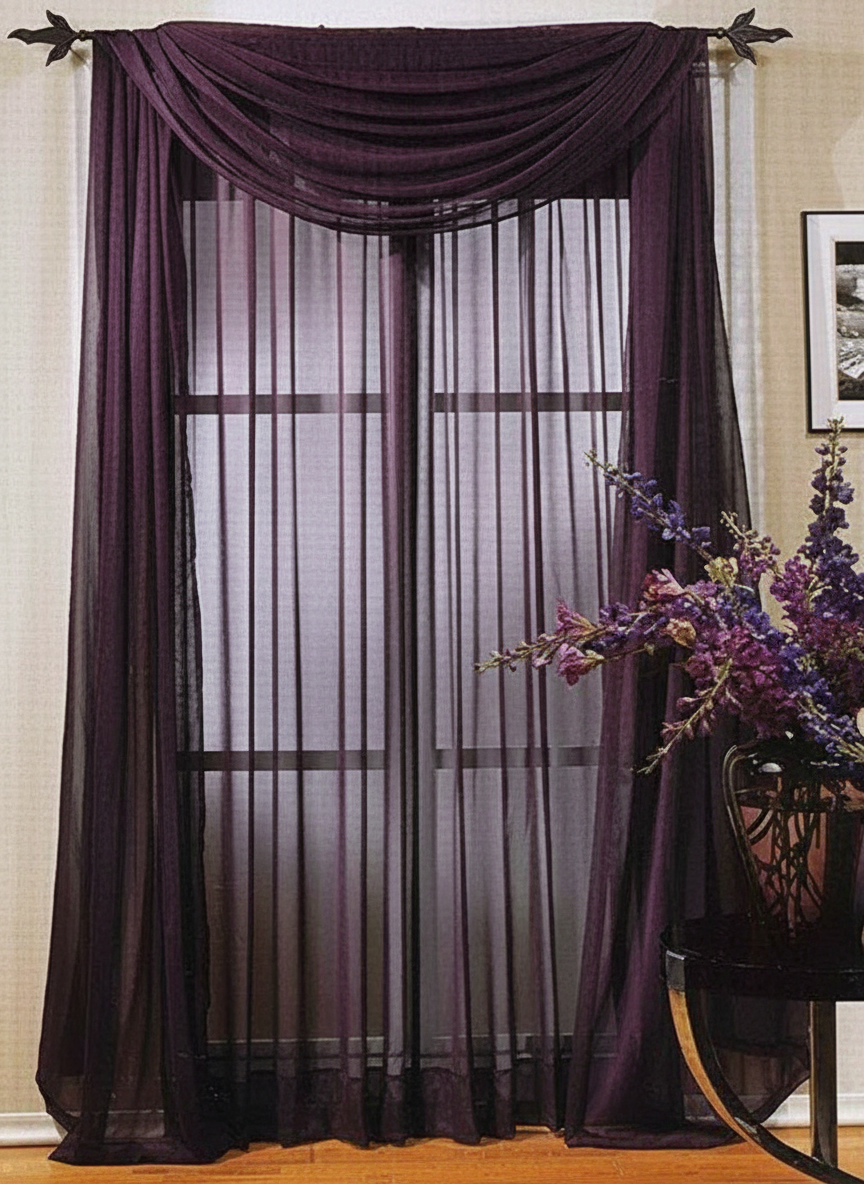
Lightweight fabrics such as organza, chiffon, and moire continue to remain fashionable, along with natural
linen textiles that emphasize simplicity and environmental friendliness. One of the more recent trends in
window decoration is the use of filament curtains. These curtains consist of numerous thin threads and can be
made from various materials. Depending on the design, they may feature shimmering fibers, decorative beads,
pearls, or crystal elements, creating striking visual effects and adding a modern touch to interior spaces.
Today curtains are much more than simple window coverings. They represent an essential element of interior
design, capable of shaping the style, comfort, and character of any room. By combining historical traditions
with modern materials and creative design solutions, curtains continue to play an important role in the
creation of beautiful and functional living spaces.